'You had to be there' to see how The City becomes a classroom

Editor's note: Dateline intern Jacqui Wilson came back from spring break marveling over the best class she had ever taken in her undergraduate career. Here is her report on a 25-year-old UC Davis "classroom" tradition.

By Jacqui Wilson


After two hours of distributing trays of quiche in St. Anthony's soup kitchen at spring vacation, I took a break to sit down and share the meal with guests. I met a homeless man recently arrived in San Francisco from New Orleans who was optimistic about finding a job. He had a great sense of humor, and we talked and joked around throughout lunch.

When he got up to leave, he thanked me for talking to him and told me that I had really helped to make his day. I realized that in that act of giving his appreciation, he had made mine.

My UC Davis roommate, who had been in the community development class winter quarter, told me what to expect from Applied Behavioral Sciences 47, but it wasn't until I spent four days of spring break in San Francisco that I really understood what she meant. Talking to others in the class, I discovered that this experience is common. "You had to be there to understand," I hear them telling their friends.

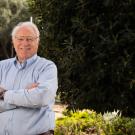
This reaction is not surprising to class co-founder Isao Fujimoto, professor emeritus and director of the Asian-American studies program.

Forced to learn


"It's a very good way to get people into situations where they're really forced to learn about many things, including themselves," he says.
The purpose of ABS 47 is to take students out of Davis and into the neighborhoods of San Francisco to see how people are working together to solve problems.

Each winter and spring quarter, Fujimoto takes a class of 36 students to stay in the San Francisco Tenderloin, where they spend four intense days experiencing firsthand many of the issues and problems present in large cities. They also learn about the resources available to the community.

The approach used in the class stresses making contact and trying to understand issues from the point of view of the community.
Students have an opportunity to volunteer in soup kitchens, walk the streets of the Tenderloin with the Guardian Angels or with a night minister, and visit various community organizations.

Included on the spring trip was a visit to Delancey Street, a program that takes in mostly ex-convicts and helps them change their lives. We were invited to eat in their dining room to talk with members of the program, who shared their own personal experiences.

The class also visited two churches, one of them Glide Memorial, where the well known Cecil Williams is the minister, and the Metropolitan Community Church, a gay and lesbian church located in the Castro neighborhood of San Francisco. Both churches were very involved in the communities they represented and provided a variety of support and services.

Quarter-century old


Fujimoto has been involved in the community resources class from the beginning, when faculty from the Department of Community and Human Resources (formerly Applied Behavioral Sciences) took on the project as part of the community development curriculum. Some 25 years later he still enjoys taking students into the city.

"For me, the most interesting part is that every class is different; there is something dynamic about each one," he says.

People are encouraged to share their thoughts, and the class creates an atmosphere where people feel that it's all right to say what they really think. For many students, I think this was a big part of the learning experience. Instead of visiting an organization or listening to someone speak and coming to our own separate conclusions, we would talk as a class about everything we had seen and heard, and learn from each other as well.

This reflection time is just one of the many teaching techniques incorporated into the class. Students also go out in small groups and explore independently, actually becoming involved with the community, as well as volunteering at several agencies. Many approaches are used in a short period, which makes for a very intense experience.

Events were scheduled at all hours of the day and night, and sleep was hard to come by. After walking the streets with the Guardian Angels from midnight until 2 a.m. in the morning, I was looking forward to a few hours of sleep before facing another full day, but sleep was not meant to be. We shared rooms with three or four other people, and with the all-hours opportunities, people were coming and going all night as well as all day. Four days of this constant activity and lack of sleep added to the intensity of the class.

Fujimoto teaches a similar monthlong class in Kyoto, Japan, in the summer. The class is open to all students from the UC system and is organized so that not only do students go out and see what the Japanese are doing to improve their neighborhoods, but work together and build their own sense of community. Applied Behavioral Sciences 153 also takes a community development approach, encouraging participation and involvement.

In both classes, Fujimoto says his job is not so much to lecture but to "pull things together so that the whole experience has a meaning." After experiencing one of them for myself, I'd say that he's doing a great job.


Top of Page Previous Next Contents